Showing posts with label family. Show all posts

15 January 2012

Packing lunch


Auschwitz-Birkenau: selection site
Matt went back to college today. It's a long trip for him: a plane, a subway, a train, and then a taxi. I got up early to pack him a lunch he could take with him.

Packing lunch -- an ordinary act I used to take so for granted when the lunches came two a day, every day. Now, it's almost a sacred act, feeding my children when they allow themselves to be fed by me. But, in that quiet kitchen, the rectangle of torn wax paper on the counter brought with it all the mothers who carefully packed food for a trip they didn't
Auschwitz-Birkenau: end of the tracks
want to take. They had no idea where they were going or what they'd find when they got there but they did what mothers do -- they packed food. They probably stood in their kitchens, terrified, but they did what they could do.

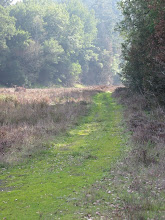
Long after the carefully wrapped food was eaten, too many of them sat on their suitcases, with their children all around them, in the stand of beautiful trees, and waited their turn.

It would be a lot easier to move through life wrapping sandwiches in oblivious peace...but I'm not sure I can do that ow that I know, now that I have seen.

For the moment, contentment with not knowing, not realizing, not seeing what happened, feels like sleepwalking to me.


Auschwitz-Birkenau: the woods near the gas chambers


03 January 2009

With grace

Christmas eve dinner, grace was said.

Kevin came home from a business trip and, although we hadn't had a chance to talk about it, he simply reached for my mother's hand and said, "Matt, would you say grace?"

Matt was thrown. He hadn't expected it. "Ah, okay. Sure."

My mom and dad put down their forks and, without any significant looks at each other, just took the hand of the person next to them... and we had grace.

14 July 2007

Re-entry

Re-entry's been strange. Matt keeps asking me why I'm being "so quiet," when am I going to "turn back into your regular self?" I think that's more about his fear about me changing in some way that might be uncomfortable for him rather than any big change in me. Plus I don't think I've ever been away from them for eight days straight since I worked for 60 MINUTES and that ended when Matt was two and Luke was four. I do feel a bit "stared at" by my family and even some of my friends, like they're looking for some evidence that I'm changing, perhaps going off the deep end. Maybe I'm just making it up but I find myself trying to assure people that I still have the same foul mouth I got from working in a television newsroom and snarky attitude. Why it's so important to me to show no evidence of change I have no idea.

When I told Luke about all of the detailed rules at the retreat and that I finally found that some of it was good in that it forced me to be more present and less in my head chatter he said, "That's called Stockholm Syndrome, Mom."


Matt added, "I feel like I'm talking to a concentration camp escapee."

I don't know what to say about this except to report it. I'm freaking out my children...and maybe others who are just too polite to tell me.

14 July 2007

11 July 2007

Suffering and compassion

Compassion. At least once a day someone says the heart of Buddhism is compassion. Today one of the Venerables – that’s the title of the women in black robes – said instead of getting angry in our minds about the Discipline Master’s actions and barked commands, we should recognize the difficulty of what she’s doing and the selfless compassion that’s involved.

Okay…

My first reaction to that statement was relief: if she felt the need to address angry reactions to what was going on, then at least I had company. I mean, one of my feet was developing a deep blood blister where the cotton shoes were rubbing, my back and thighs were coming up with odd twinges from kneeling and standing motionless for long periods on marble floors, it was over a hundred degrees at midday, and people were yelling at us because we couldn't flawlessly follow dozens of rules we'd just heard for the first time 48 hours ago - in Mandarin. I was feeling especially mortified by my glaring imperfection, me, Miss Teacher's Pet Rule-Follower, unable to kneel when I was supposed to kneel, bow when I was supposed to bow, stand when I was supposed to stand.

That morning, when I’d blown it yet again, and was looking frantically through the chant book, I suddenly noticed the commands to kneel, bow and stand, in some cases, were actually in the chanted words themselves. So most of the people knew when to kneel, bow, and stand because it was actually in the words they were saying, the same words I was chanting but couldn't understand. I started to cry. Right there, in the front row, in my gray and brown robes. I felt like I was six. Unfair! It’s all unfair!

I sat in the air conditioned auditorium afterwards. A nun was speaking Chinese into the microphone up front when the teacher from Torrance passed me a note. It said: "If you would be interested in similar experiences without the frustrations, look into the Shambala Center in Eagle Rock – very American - or anywhere that’s oriented towards laity.”

I scribbled "thank you" on the note and gave it back to her. I was grateful for the kindness of this stranger I’d been wordlessly muddling along with for four days. But I had another reaction as well: Sure, I am pushed to my limits by all this but I don’t think I want diluted Buddhism, one made palatable for my American idiosyncrasies. Certainly not for this project because that would be off-point but I'm not sure I'd want that anyway. First, it’s unfair to think I was learning how to become just another practicing Buddhist when this retreat's very title, "Short-term Monastic Retreat," told me otherwise. I'm quite certain the rigors of clergy training in any faith would put me into the same state, no matter what the religion. But if the point of Buddhism is, as they said, to reveal the true nature we all have hidden by our greed, anger and ignorance, well, it was plain that this retreat was certainly kicking up a dust storm of my defects.

The Venerable standing in front of us in the auditorium was talking about our attitudes towards this retreat, the challenges we were facing in ourselves because of its rigor, she said that the lack of complicated morning skincare should feel freeing. “You should be happy because no one will be looking at you anyway. No matter how good your skincare products, you cannot use them on your mind.”

Someone laughed. I thought it was in appreciation of the idea. It does make its point in a funny way. But the Venerable barked, “You laugh? Aren’t you ashamed of yourself? Where is your mind? No one’s going to look out for you. We have this structure, these corrections to help you.”

I was shocked. I felt like I’d fallen into some alternate universe where conventional social niceties were violations and what would be rude disregard was a virtue. It sure felt anything but compassionate to me. If that’s compassion, it’s a pretty muscular definition unlike any I’ve known. I don’t think of stern admonitions demanding to know “where is your mind?” as compassionate. But perhaps I should consider it.

My mind is usually on anything but where I am or what I’m doing. Instead of concentrating on the rituals I'm learning, I'm almost exclusively focused on pleasing those around me, doing it "best" and, therefore paradoxically, doing it worst. I've had jobs where practically my entire concern was over what people thought of me rather than the tasks at hand. Right now, I get in the car to drive the boys to school and I swear the car drives itself. I remember none of the actual driving because I’ve nursed whatever worry I have to some kind of action plan for the day. And it's never occurred to me that this might be a problem. I love the world that swirls in my head – most of the time – and I think I even use it to protect myself.

I remember when I first realized that I didn’t have to actually be in the car with my squabbling family, that I could look out the window and conduct thought experiments in my head – If I can see that man walking his dog on the street, can he see me? Will any boy ever want to kiss me? If I broke my leg like Helen Pilling, would as many people want to sign my cast? – and, whatever imperfections I decided my family members had, would fade. I could no longer see them or even hear them.

A lot of the time, I am still that little kid worried about what the world thinks of me. My head is crammed full of it.

On the other hand, the very idea to do what I’m doing came from one of those mind-wandering drives. About a year before 9/11, I’d gotten tired of feeling bewildered when I listened to news reports of people of faith in disagreement or at war with each other over matters of faith so I decided to take two freshman survey courses at the local state university: Intro to the Bible and Intro to World Religions. On my final drive home from the classes, I felt a deep relief that at least I now understood some of the basics of what people believed, of what was actually written in the Bible. But, as my car left one freeway for another, I began to think, "I still have no idea what it feels like to actually practice any religion. What would happen if….?” And this project is what came of that mind ramble. I’m not so sure I want to give those rambles up. Or if I should even try, what the purpose might be, and what any of this has to do with religion.

But the central purpose of Buddhism is to alleviate suffering and there is no doubt that these nuns think suffering comes from our thinking, from an out of control mind. And, believe me, I could see and feel my mind run riot almost moment by moment in the four days of not talking and just doing.

On the retreat schedule, every morning after breakfast, we had a walking meditation. Sometimes it was a normal deliberate walk, other times it was as slow as our breathing. We were supposed to be utterly conscious of our bodies as the weight shifts from one foot to another. We were always in a line, always behind the same person.

This morning, Ven Miao Hsi was busy so we had had a new leader, an earnest young nun who was concerned that we looked so nervous. Well, yeah, we were nervous. There seemed to be so many ways to go wrong, so many ways to be "unmindful." She seemed particularly concerned about my furrowed brow. "You seem worried. I can tell by the lines on your face."

I thought: well, I suppose there's botox for that. Unfortunately, I could ever pay someone to inject paralytic toxin into my face so, instead, I choose to think of the deep lines around my mouth as my "smile" lines and the twin vertical lines over my nose as my "thought plumes." On my sane days, I'm even rather proud of those. But the collision of all of these present moment-by-moment rules with my people-pleasing performance anxiety and churning storytelling brain was eye-opening. I hadn’t considered the extent to which I fundamentally operate from “I think, therefore I am.”

If thinking is the source of suffering, (which it’s pretty hard to argue it isn’t) I think I embrace suffering. In fact, I might go even one step further: I can’t think of a lesson I’ve learned in my life that was worth anything that I learned without suffering. I mean, would I be on this retreat if I didn't believe in the value of suffering?

Well, maybe there is one.

When I gave birth to my sons, I learned I was capable of sustained, unconditional love. I suppose some might argue there was suffering involved, physical and structural life changes, but I can’t call any of it that. Although sitting here right now in front of this keyboard, I can go into the future, the future when, if I’ve done the job right, my boys will leave without a thought for their independent lives and, yes, I will suffer then. I can weep right now, thinking about it.

Is this evidence of the damage thought can do? Is this an example of how not being where you are, where your body is at this moment, can saddle life with unnecessary pain, wiping out present joy?

“Anyone can be a Buddha,” the shorn nun said. “All sentient beings are equal. No one is more likely than anyone else.” We just have to come to know that, to be able to see this “precious pearl” we all have hiding under the muck of our greed, anger and ignorance. And this “compassionate” stress on being present in the here and now is meant to help us see everything that we contribute to our own muck.

One of the Venerables asked if we thought our life was tough, if we thought this retreat was tough. “Easy or tough, depends on your mind. Happiness and suffering all come and go. Nothing is permanent.”

Not even this retreat.


11 July 2007

10 July 2007

My new name?

When you become a Buddhist monk or nun, you get a new name. Mine was "Ben Ri." For the rest of the Hsi Lai Eight Precept retreat, that was what I was called and how I had to sign my name. Our entire group was "Ben" something. When they gave me my new name tag, I decided that, when I got a chance to talk, I was going to ask Venerable Miao Hsi how to pronounce it and what, if anything, Ben Ri meant.

This idea of getting a new name... I guess that happens in a number of different religions. At least some Catholic nuns change their names when they become nuns but I think they get to choose their own. I'm not sure how I feel about this idea of a new name, of leaving the one I was born with behind.

Before I got married, I never felt all that strongly one way or the other about the whole name change thing, perhaps because I really only ever use my first name anyway. It's unusual enough, it usually doesn't require a last name to separate this Marley out from all the rest. So, I figured that, if I got married and if I liked my future husband's last name better than mine, I'd change it. If I didn't, I wouldn't. But, when Kevin and I decided to get married and it turned out that I actually did like his last name, I found I just couldn't do it. I'd been "me" too long. It felt weird to change my name, the implication seemed too great, like I was going to have to give up my very identity just because I'd decided I could spend the rest of my life with this guy and I didn't think that's what being married meant, giving up my separate identity. I thought it was more like deciding to go down the same path together.

Now, this may explain some of why we had a pretty rocky time of it our first decade together. But, just a few months ago, as a twentieth anniversary present, I told Kevin that I was finally -- and officially -- going to take his last name. He burst into tears. He'd been pretty cool about it when I'd decided not to back in 1987 so I was shocked it meant so much to him. I can't finish all the paperwork to make the name change official until the end of the summer but I put a ribbon around the initial social security forms and gave them to him as my present. Just in terms of reaction, it may be one of the best presents I've ever given.

I wonder what it'll feel like, how much it'll matter, that my name will be new, different. I mean, I even have to get used to a new signature when my pen seems to write the name I was born with almost automatically. I guess I'd better start practicing...

But I'm not writing about marriage...although, perhaps, the problem I had letting go of my old identity and the effect of that unwillingness is exactly why ordination comes with a new name. I guess I have a pretty strong notion of who "Marley" is and what it means to be me. I always assumed that that was a good thing, something to work for. And it's important to me, this name: it was my mother's mother's last name. There have been consequences of the choice of this name for me, a story that went with it, a story that I love, that has become mine because my name is Marley. So, when I consider the possibility that I could, if I wanted to, live the rest of my life without that name, I find it completely confusing. There is part of me that's sitting here demanding to know who I might be, then, without that name? Would I be "me?" Should I care that much about something that's the definition of superficial? I mean, my name isn't me, is it?
My Hindu teacher, Swami Sarvadevananda (who also got a new name when he became a swami) refused to talk about his previous name, the name he was given at birth. He'd left that person behind along with his old life, his old concept of himself. Do I want to leave mine behind? Is it even possible?

How much does my name have to do with who I am anyway? Who I really am?

During the time we were supposed to be taking our showers, I went looking for Venerable Miao Hsi. She was answering email at her desk. "Can you tell me how to say my name?"
I cannot even pretend to replicate here how Ven Miao Hsi said to pronounce Ben Ri: it's pronounced nothing like it looks. The "Ben" part is pretty straight forward but"Ri" involves some teeth, mouth, and throat action we don't use in English that I could never quite master.

And how did she choose mine? "We just give out the names at random. From a list. 'Ri' means 'now,' so Ben Ri means: 'beginning' or 'starting now.' "

Beginning Now. Pretty perfect, eh?

10 July 2007

07 January 2007

"I don't want to have to rescue you..."

It never crossed my mind that what I’m doing might affect my family…maybe even scare them a bit....

At the beginning the aspirant should go into solitude now and then. Spiritual discipline is necessary. You want to eat rice; suppose you sit down somewhere and say, ‘Wood contains fire and fire cooks rice.’ Can saying it cook the rice? You must get two pieces of wood and by rubbing them together bring out the fire.

Sri Ramakrishna
The Gospel of Sri Ramakrishna


I'd decided to go to the Vedanta Society’s retreat center in Olema, California, near Point Reyes National Seashore. It required a letter from Swami Sarvadevananda and permission from the swami in charge of the retreat center – and I’d gotten both. The women’s center allowed no more than eight women at a time so, on a Sunday afternoon, I brought it up with Kevin. “The retreat center said it would be okay if I came up so I have to decide when to go.”

Kevin was at the sink, filling up the tea kettle. He’d gone straight from the gym to the farmer’s market without a shower. The late morning sun was coming through his wild, early silver hair. Sundays are sweet, sleepy; each of us usually puttering somewhere in the house in the comfort of communal solitude.

Kevin walked from the sink to the stove with the kettle and said, teasing, “I’m not going to have to come rescue you from a cult or anything, am I?”

A messy pile of newspapers was on the yellow-and-blue tablecloth in front of me along with the tops of a few strawberries on a small white plate. There was so much light coming from the windows near the table, Kevin hadn’t bothered to turn the lights on over the stove, the darkest part of the kitchen. We were both in our Sunday best: sweats and shorts, loose shirts, shoes meant to be worn, not looked at. Kevin put the kettle down on a burner.

“It’s just a silent retreat,” I said. “There aren’t any group events or talking or even eating together. You even have to bring your own food.”

His back was still to me as he bent down to make sure the gas was turned on under the correct burner even though he knew those burners by heart.

This wasn’t a joke. He was actually worried.

I got up because I couldn’t think what to say. I started to take some useless receipts and out-of-date school lunch forms off the refrigerator door when the kitchen door slammed open. Luke never could just open a door; his entrance was always an event. “Bertrand Russell’s a fucking idiot.” He paused, looking for a reaction, but then barreled on without one. “You think Mickey Morgan would mind if I called my essay: ‘Bertrand Russell’s a Fucking Idiot’?”

Luke was standing in his boxers and socks. There was no muscle, bone, organ or hair follicle in his body that wasn’t straining and stamping towards adulthood but not always at the same time or in the same direction. Still in front of the lichen of promotional magnets, yellowed receipts, a half-full grocery notepad and ancient school announcements, I was torn, between life and lists, between loving and organizing. I gave up on the fridge door. What were my options? Deal with the words or with the passion? Teacher Mom or Etiquette Mom? I hate Etiquette Mom. She ‘s a priss, and pretty ineffective, too. Of course, there was always Tired Mom or Distracted Mom or Keep-to-the-Schedule-Mom or I’m-Talking-to-Your-Father Mom.

Maybe it’s time to experiment with no official role at all.

I turned from the fridge door and said, “I think you have a perfectly grabby title without that one word.”

“Yeah, but he is, he’s a fucking idiot.”

I decided to concentrate on the fact Luke was, well, talking about homework, at least. “What’s this essay about?”

“God.”

“God?”

“God.” He swiped a glass from the cupboard and got between me and the refrigerator to pull the cranberry juice out of it.

I threw the papers I’d taken off the door into the trash and said, “How long is it supposed to be?”
“The usual. Two to three pages.”

That made sense. God, in two or three pages. By Wednesday. My insanity is spreading.

Or maybe he’s just fifteen.

When I was fifteen I took a stance that all music was bad, that it filled up space in brains like so much cotton, protecting people from the sharp edges of their thoughts. I took it mostly to see what would happen. It was thrilling standing out there alone on a plank, seeing what passion I could stir up just with words and stubbornness.

Kevin, who’s usually game for debates, was staying focused on his tea-making so I bit: “So why is Bertrand Russell an idiot?”

“He takes the position that Thomas Aquinas’ Prime Mover theory – you know the one that says that of course God exists because nothing can start moving without something making it move?” He waited, glaring. He’d even stopped mid-pour. When I nodded, he continued pouring but not before roughly wiping his long hair off his face - with the hand with the cap to the cranberry juice bottle still in it. “Well, Russell says that’s bogus because nothing can exist without a cause. Just because he can’t imagine something that could create itself doesn’t mean it can’t exist. I mean, if God is omniscient and omnipotent and infinite, then why couldn’t God create itself?” He threw the bottle of cranberry juice back in the fridge door, turned back to me, and said, “Om – ni - scient. Om - ni - po - tent.” He snorted and then took a swig of his red juice.

This was the child who, at six, announced that he knew there was no God because he thought the Big Bang theory made the most sense as the origin of the universe. Now, he's God’s advocate. Of course, his younger brother, Matt, whose answer when he was four years old to Luke's Big Bang thesis was , simply, that God did exist and who has insisted on saying grace before every meal before anyone can eat since he was five, now thinks he's Wiccan.

I took hold of Luke’s forearm so I could stand on my toes to sort of kiss his scruffy cheek and said, “I know you’ll figure it out.”

“What-ever.” He wheeled around, long hair flying, pounding the living room floor as he left for his room. Just before his bedroom door slammed shut, Kevin and I heard, “Fucking Bertrand Russell.”

Kevin and I just looked at each other in the stillness Luke left behind, the question and answer didn’t need to be said out loud: did we just do the right thing? Not reacting, not going after the language? Probably not, but who knew? Kevin scooped some loose tea from one of his tins of Chinese tea into a small pot.

I said, “Don’t worry, Boy. I’ve stayed away from any temple where they looked way too happy.”

“I’m not sure what that means, but, okay. I just don’t want to have to rescue you.” Kevin was on the other side of the butcher block island slowly pouring the boiling water over the dry leaves.

“Boy, don’t worry. It’s still me.”